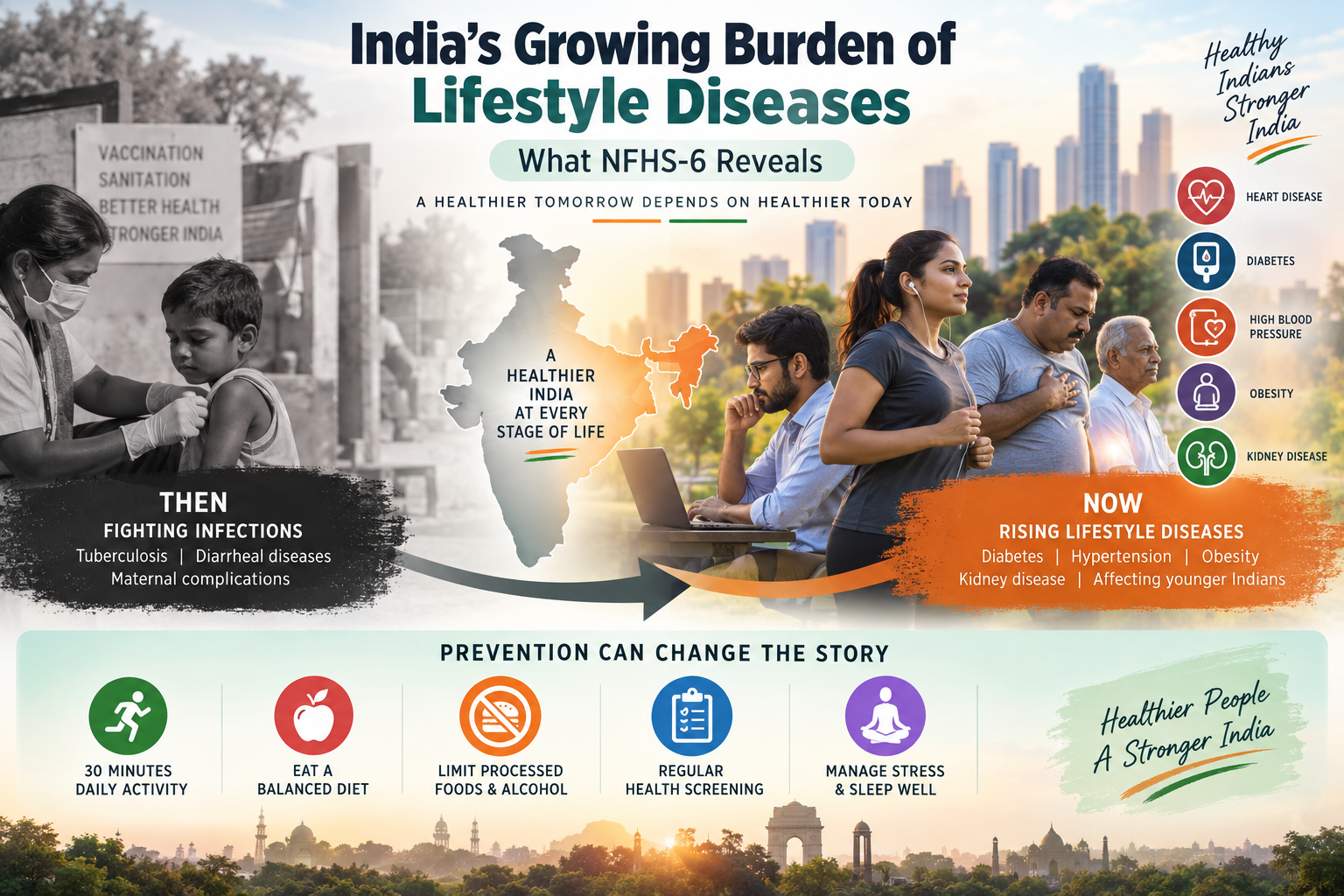
India’s health story is being rewritten. The latest National Family Health Survey (NFHS-6) confirms what doctors have long suspected: lifestyle diseases in India are rising sharply even as infectious diseases decline. This shift, often called an “epidemiological transition”, marks one of the most significant public health changes in the country’s recent history.
From Infections to Lifestyle Diseases
For decades, India’s health system focused on fighting tuberculosis, diarrhoeal diseases, and maternal complications. Better sanitation, wider vaccination coverage, and improved access to healthcare have brought many of these under control. But NFHS-6 data shows a new pattern emerging in their place — rising obesity in India, elevated blood sugar levels, high blood pressure, and heart disease. Experts note that better internet access and health awareness have also helped curb infections, even as urban stress, sedentary jobs, and poor dietary habits fuel non-communicable diseases (NCDs).
Why Non-Communicable Diseases Are India’s Next Big Challenge
Non-communicable diseases in India now account for nearly two-thirds of all deaths, according to Global Burden of Disease estimates. Unlike infections, these conditions progress silently. The ICMR-INDIAB study found that 136 million Indians live with prediabetes — a symptomless stage that quietly damages blood vessels years before diagnosis. This “diagnostic latency” means many patients only seek care after suffering strokes, heart attacks, or kidney failure.
The Hidden Kidney Health Crisis
One of the most overlooked consequences of this shift is chronic kidney disease (CKD) in India. A recent Lancet study placed India second globally for CKD cases. with roughly 138 million people affected. Since uncontrolled diabetes and hypertension are leading causes of kidney damage, and symptoms like swelling, fatigue, or foamy urine appear only after significant damage occurs, doctors are urging annual kidney screening for anyone over 40 or living with diabetes, high blood pressure, or obesity.
Younger Indians Are Increasingly at Risk
Perhaps the most alarming trend is age. Conditions once associated with people over 50 are now showing up in Indians in their twenties and thirties. Long working hours, desk-bound routines, processed food consumption, poor sleep, and unsupervised supplement use are pushing early-onset diabetes and hypertension into younger populations.
Prevention Is the Way Forward
Despite these worrying figures, most lifestyle diseases are preventable. Health experts recommend:
—At least 30 minutes of daily physical activity
—A balanced diet rich in fruits, vegetables, and whole grains
—Limiting processed foods, sugary drinks, and alcohol
—Regular screening for blood pressure, blood sugar, cholesterol, and kidney function
—Managing stress and prioritising quality sleep
Government initiatives like Ayushman Arogya Mandirs have expanded screening access across the country, but experts agree that curbing India’s NCD burden will require stronger food regulations, urban planning that promotes activity, and a decisive shift from curative to preventive healthcare.
India successfully tamed many of its infectious disease threats. The next public health battle — against diabetes, hypertension, obesity, and kidney disease — will be won not in hospitals, but in daily habits.