A proven orthopaedic technique is now in demand for height, and the profession must lead on standards.
Q. Is “Doctor, can I become taller?” a question orthopaedic surgeons now hear often?
Prof. (Dr) Rajesh Bhalla: In India, as in many societies, height is often associated with confidence and desirability. Matrimonial advertisements frequently mention it, and some police and armed forces recruitment sets minimum height cut-offs. Social media has only sharpened the comparison. It is hardly surprising, then, that young people now walk into orthopaedic clinics and ask, a little shyly, “Doctor, can I become taller?” A decade ago the question was rare. Today it is part of mainstream clinical practice, and the healthcare industry should answer it with expertise and honesty, not discomfort.
Q. Where does limb lengthening come from?
Prof. (Dr) Rajesh Bhalla: The Ilizarov method has a distinguished medical heritage. In the 1950s, Gavriil Ilizarov, a Soviet physician in Kurgan, Siberia, discovered distraction osteogenesis. This is the process where slow, controlled pulling apart of bone fragments (distraction) stimulates new bone, blood vessel and soft-tissue growth. It remains one of the most important biological principles in modern orthopaedics.
Q. When is it medically essential?
Prof. (Dr) Rajesh Bhalla: It is used for fractures that have failed to unite or healed in the wrong position and for chronic bone infection, where diseased bone must be removed and replaced with healthy new bone. It is used when a segment of bone is lost after severe trauma or tumour surgery, through a method called bone transport, where a healthy section is slowly moved to fill the defect. It also corrects limb length differences caused by childhood infection, polio, growth plate injury or congenital conditions, and deformities such as bow legs from rickets or Blount’s disease.
Q. How does a lengthening unfold?
Prof. (Dr) Rajesh Bhalla: Whether the aim is correction or height, treatment follows the same three stages. The first is osteotomy, a controlled surgical cut in the bone, usually the thigh bone, the shin bone or both, followed by fitting of a circular frame, an internal lengthening nail, or a combination of the two. After a short waiting period comes gradual distraction, in which the bone ends are separated by roughly a millimetre a day, with the adjustment made several times daily by the patient or a caregiver. Once the target length is reached, consolidation begins, as the new bone matures and hardens enough to bear full weight, and the device can be removed. Physiotherapy runs through all three stages to protect joint movement and muscle strength.
Q. How long does it take?
Prof. (Dr) Rajesh Bhalla: At a typical distraction rate of around 1 mm per day, approximately 2.5 cm can be gained per month. A 5 cm gain may require around 50 days of active distraction followed by approximately 100 days or more of consolidation, about five months in total, depending on healing and technique. Recovery varies considerably between patients, depending on age, bone healing, the technique used, the length sought, how well joints and muscles tolerate stretching, and how closely the programme is followed. For most it is a matter of many months, not weeks.
Q. How much height can be gained?
Prof. (Dr) Rajesh Bhalla: In selected cases, approximately 5 to 6 cm may be considered in the tibia and 7.5 to 8 cm in the femur. Combined, staged procedures may achieve 12 to 15 cm of total height gain, but these are not guaranteed or universally safe targets. Targets must be individualised to the patient and the bone involved.
Q. Is cosmetic lengthening just vanity?
Prof. (Dr) Rajesh Bhalla: It is easy to dismiss cosmetic lengthening as vanity. That overlooks the reality of living in a society where height carries such weight, in relationships, careers and self-image. For a well-informed adult who has thought carefully about the decision, understands the commitment and has realistic expectations, lengthening can be a legitimate option, provided the risks are accepted with open eyes.
Q. What are the risks?
Prof. (Dr) Rajesh Bhalla: Limb lengthening is major surgery, and complications are common. Patients must therefore hear about the possibility of further operations, prolonged stiffness and, in a minority, lasting consequences before any decision is made.
Q. What does a responsible approach look like?
Prof. (Dr) Rajesh Bhalla: Our field needs to set the standards before the market does. Any serious assessment should begin with the question “why”, followed by a review of medical need, bone quality and general health. A psychological assessment should be part of that process, ideally by a professional independent of the operating team, to identify body dysmorphic disorder, untreated depression or anxiety, unrealistic expectations, and pressure from family or a prospective partner. Patients must be told candidly that a few centimetres will not repair self-esteem or change how society judges people. Targets should be individualised, expectations realistic and patient selection careful, so that those who proceed are those most likely to benefit.
Q. What is the way forward?
Prof. (Dr) Rajesh Bhalla: Healthcare leaders cannot change a social preference, but they can ensure that those who choose limb lengthening do so with accurate information and in properly equipped centres. India’s orthopaedic community has long experience with the Ilizarov method, and publishing its own outcome and complication data in a standardised way would strengthen both patient trust and the evidence base. Led by clinical need, delivered with rigour and chosen by well-informed patients, the technique can continue to expand what orthopaedics offers, from saving limbs to, for carefully selected patients, adding a few centimetres of height.
Q. What should patients keep in mind before considering it?
Prof. (Dr) Rajesh Bhalla: Cosmetic height enhancement should be distinguished from medical limb lengthening to correct a discrepancy, such as one leg being shorter than the other. The appropriate technique, achievable length, recovery period and physiotherapy requirements depend on the individual and the bone involved, the femur (thigh bone) or tibia (shin bone). Assessment by an experienced limb-reconstruction surgeon is essential before considering treatment.
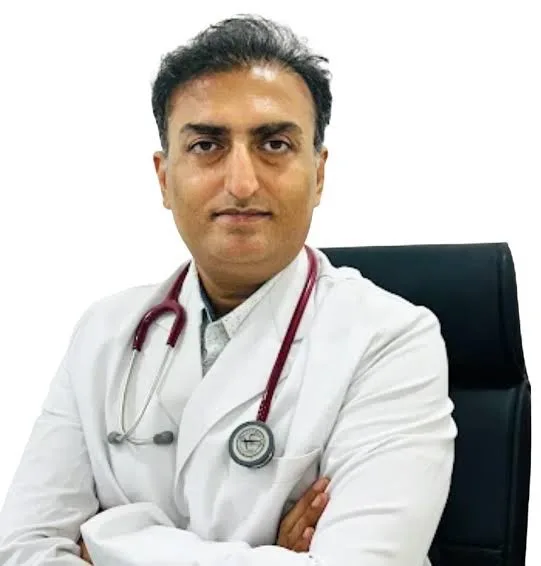
Prof. (Dr) Rajesh Bhalla is an orthopaedic surgeon at JMC Hospital, Delhi (https://drrajeshbhalla.com/).