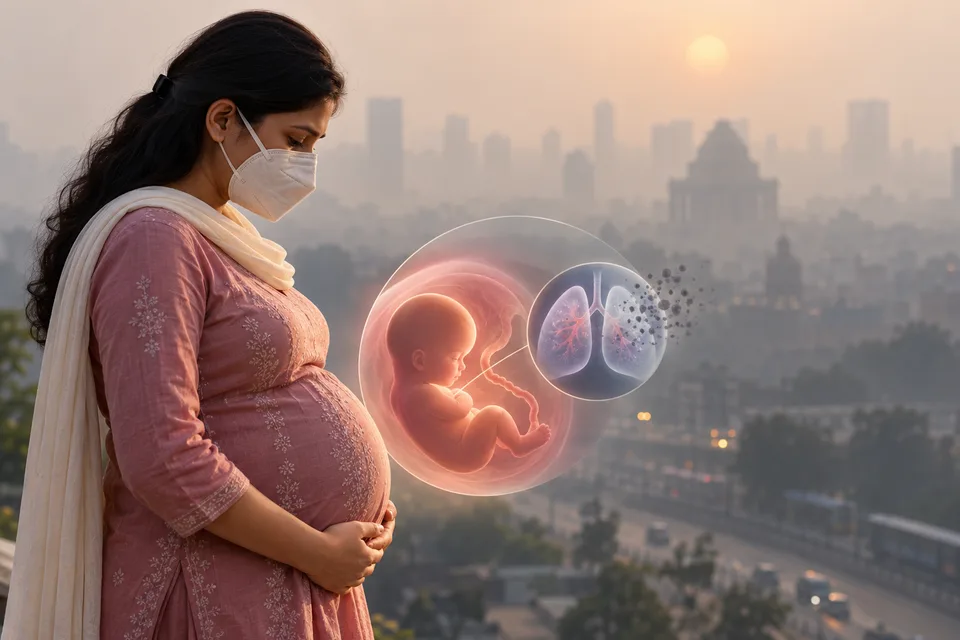
As smog settles over North India each winter, the concern is usually about children and adults who are already breathing it. A quieter worry is the unborn child. A 2025 study in PLOS Global Public Health, by researchers from IIT Delhi, IIPS Mumbai and other international institutes, combined NFHS-5 data with satellite pollution data. It linked higher PM2.5 exposure during pregnancy to low-birth-weight and preterm births.
Doctors say the findings call for attention, not alarm. “Pollution raises the risk, but it does not decide the outcome,” says Dr Camelia Maitra, consultant obstetrician and gynaecologist at Fortis Hospital, Shalimar Bagh. Large-group patterns, she explains, do not mean any one baby will be affected, and nutrition, anaemia, blood pressure and regular antenatal care all shape a pregnancy too.
“A child’s lungs keep developing well after birth, so they are especially vulnerable to polluted air in the early years,” says Dr Rahul Roshan, Director, Centre for Chest & Respiratory Diseases, BLK-Max Hospital. High exposure during pregnancy and infancy has been linked to poorer lung development and lower lung capacity, including in Indian studies. Affected children may have more frequent coughs, wheezing and chest infections, and some may face a higher risk of asthma and chronic lung problems later in life.
For babies born early or underweight, the worry extends to the brain. Dr Sumit Verma, Senior Consultant Neurologist at Regency Health, Lucknow, says such babies can be slower in speech, movement and attention, and some show learning difficulties later. “Babies born early already have delicate brains, and extra exposure could make that vulnerability worse,” he says. He adds that pollution cannot be said to cause this on its own.
Not just the smog outside
The air indoors matters as much, says Dr Maitra. “Outdoor air gets the headlines, but for many women the air inside the home matters a great deal,” she says. Smoke from wood, cow dung or coal, and tobacco smoke from others in the household can expose a woman to high levels of particles for hours every day. Studies have linked such smoke to low birth weight.
Her advice is to prioritise. A pregnant woman should first treat anaemia, eat well, take prescribed supplements and attend every check-up. Second, she should remove indoor smoke by switching to cleaner fuel such as LPG or induction and cooking in a ventilated space. Third, she should cut outdoor exposure on high-pollution days. “The first two are largely in her control and give the most benefit,” Dr Maitra says. She also recommends a flu vaccine in the second trimester, since repeated viral infections can indirectly affect the baby.
What science still can’t say
Much remains unsettled. Dr Verma says fine particles are known to cause inflammation and oxidative stress, and some studies link prenatal exposure to poorer cognitive and behavioural outcomes in children. But “what is not proven is exactly how much damage occurs, at what dose, and during which weeks of pregnancy.” Most findings show association rather than clear cause, and studies struggle to separate pollution from poverty, diet and housing.
Dr Roshan also urges perspective. Pollution, he says, is one factor among several, alongside genetics, nutrition, infections and indoor smoke. “But because lung growth can’t easily be made up later, prevention in the early years matters.”
Warning signs and what families can do
Parents should get a child checked if a cough lasts more than a week or is worse at night or with play, Dr Roshan says. Other signs are wheezing, fast or laboured breathing, repeated chest infections, or a child who tires more easily than others of the same age. “Infants who breathe rapidly or struggle to feed need prompt medical attention,” he says.
Dr Verma asks parents to track milestones such as holding the head up, sitting, walking, babbling and first words. Red flags include very stiff or floppy limbs, poor feeding, unusual irritability, seizures, and not responding to sound or faces. Early review and timely therapy, he says, make a real difference.
At home, Dr Roshan says, families should avoid smoky cooking fuels or ensure good ventilation, keep indoor spaces smoke-free, keep children indoors during peak smog hours and keep vaccinations, including flu and pneumococcal, where advised, up to date. “Air purifiers and masks can help in some settings, but they are not a substitute for the basics,” he says.
Dr Verma’s advice sums up the doctors’ message: “Don’t panic, but take the risk seriously.”