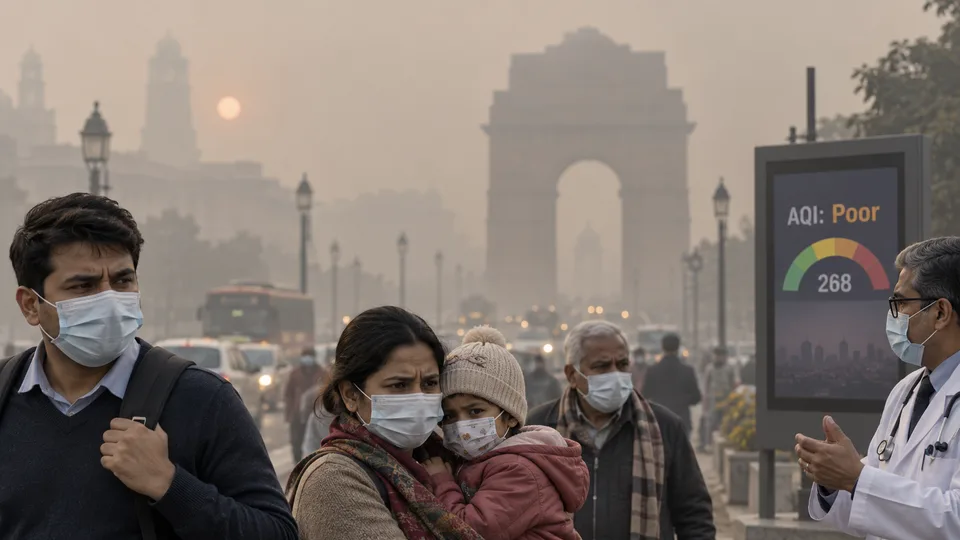
That scratchy throat in the morning, the cough that lingers a little too long, the extra effort on the stairs: for many Delhiites, the first signs of toxic air show up in the body well before they show up in the headlines. This week, the Capital’s air quality has slipped into the ‘poor’ category, and the health warnings have started with it.
Delhi-NCR has now moved into its first line of pollution defence. Authorities have invoked Stage I of the Graded Response Action Plan (GRAP). For residents, the concern is not just the number on the AQI board. Doctors say the health effects can begin well before pollution turns severe.
“Air pollution should not be considered merely a seasonal issue,” said Dr Rahul Roshan, Director, Centre for Chest & Respiratory Diseases, BLK-Max Hospital. Fine particulate matter, he explained, can irritate the respiratory tract, aggravate existing lung conditions and also strain the heart.
However, he noted that severity depends on pollution levels, duration of exposure and individual susceptibility. Dr Roshan warned that even healthy people may develop coughing, throat irritation or wheezing after repeated exposure.
Dr Dhruv Anand, a pulmonologist and sleep medicine specialist at Fortis Hospital, said fine particles can inflame the airways, causing cough, sore throat, chest tightness, and wheezing. Asthma and COPD patients are at greater risk of severe symptoms.
“Persistent cough, throat irritation, chest tightness or breathlessness during routine activity should not be ignored,” he said. On high-pollution days, he advised limiting outdoor activity, using air purifiers, wearing masks, and taking prescribed medicines regularly on a doctor’s advice.
Dr Roshan added that people with existing respiratory or cardiovascular conditions need to be cautious. Children should avoid strenuous outdoor activity, while older adults and pregnant women should minimise unnecessary exposure. “In case of any noticeable worsening of an existing condition, medical help should be immediately sought,” he said.
What you can do now:
1. Check the AQI before planning outdoor exercise, and move workouts indoors on ‘poor’ days.
2. Keep windows closed when pollution peaks, and keep inhalers and prescribed medicines within reach.
3. Choose a well-fitted N95-type mask over a loose cloth mask when stepping out.
4. Watch for warning signs such as worsening breathlessness, chest tightness or a cough that will not settle.