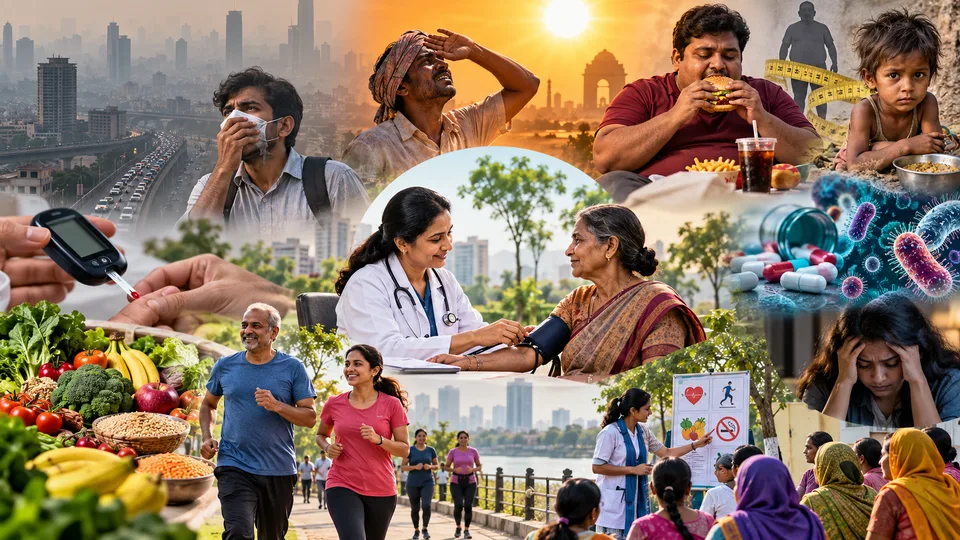
A new Lancet Commission on 21st Century Global Threats to Health has identified 17 interconnected threats that may cause enormous losses of healthy life across 204 countries and territories by the year 2100. These range from air pollution, climate change, antimicrobial resistance and obesity to inequality, poor mental health and childhood malnutrition.
For India, the findings bring several pressing public health concerns into sharper focus. Air pollution and extreme heat are already major challenges, while high blood pressure, obesity and other non-communicable diseases add to the country’s health burden. Doctors say the report’s central message is clear: India must shift from treating illness to preventing it.
Prevention over treatment
Dr. Ranjana Bhatt, Associate Director - Internal Medicine, Paras Health Panchkula, said, “India must prioritise threats that affect the largest number of people and have long-term consequences, particularly air pollution, hypertension, obesity and antimicrobial resistance. These challenges require a stronger focus on prevention rather than treatment alone. Policies should promote cleaner air, healthier diets, physical activity and regular screening for non-communicable diseases.”
Dr. Bibhu Anand, a medicine specialist at Sir Ganga Ram Hospital, said, “The Lancet Commission’s message is that the next big health crisis may not arrive as a single outbreak. It is already building quietly through pollution, rising blood pressure and diabetes, antibiotic resistance and unequal access to care. Too many patients reach a doctor late, often when a condition has already become serious.”
He added, “India needs to shift from treating illness to preventing it, with stronger primary care, regular screening and awareness that starts in schools and communities. Health also has to be part of conversations on climate, nutrition, and urban planning. Prevention and early detection will save far more lives than any late intervention.”
The double burden of undernutrition and lifestyle disease
Dr. Ranjana adds, “India must also strengthen nutrition programmes to tackle undernutrition alongside rising obesity. A coordinated approach involving healthcare, education, urban planning, and environmental policy can significantly reduce the country’s future health burden.”
Dr. Gagan Anand, Senior Consultant, Max Shalimar Bagh, said, “The report highlights the double burden India is facing, where undernutrition exists alongside rising obesity, high blood pressure and diabetes. Younger patients are increasingly being diagnosed with lifestyle-related conditions that were once seen later in life.”
Air pollution and heat: a year-round threat
Dr. Dhruv Anand, a respiratory specialist at Fortis Hospital, said, “This report reflects what clinics across the country see every day. Air pollution is no longer a seasonal problem. It affects children, older adults and people with asthma, COPD and other chronic lung conditions throughout the year, and extreme heat adds to that strain. Persistent cough, breathlessness and worsening of existing conditions are increasingly common presentations.”
He noted that India needs stricter action on air quality, better public awareness and early screening for lung disease. Individuals can avoid smoking, limit exposure to high-pollution days, use protective masks when needed, and seek medical attention for symptoms that last more than a few weeks.
Antimicrobial resistance: a silent threat
Dr. Ranjana said, “Responsible antibiotic use, stronger infection surveillance and better access to affordable healthcare are essential to address antimicrobial resistance.”
Dr. Gagan Anand added, “Antimicrobial resistance is another serious concern, because self-medication and unnecessary antibiotic use can make common infections harder to treat. Regular blood pressure and blood sugar checks, balanced nutrition, physical activity and taking antibiotics only when prescribed are simple steps that can make a real difference. Early detection and consistent follow-up remain the strongest tools in medicine.”
Building systems that anticipate, not just respond
Dr. Ranjana said that India needs to move from responding to health emergencies after they occur to building systems that can anticipate and prevent them. This requires stronger disease surveillance, robust primary healthcare, trained public health professionals and better coordination between health, environment and disaster management agencies.
“Climate-related risks such as extreme heat and air pollution must be integrated into local health planning, with early warning systems and targeted protection for vulnerable populations. Pandemic preparedness also requires reliable data, laboratory capacity and coordinated emergency responses. As artificial intelligence becomes more widely used, clear safeguards around patient privacy, accountability and misuse are essential. Long-term investment in prevention and preparedness will help protect future generations,” she added.