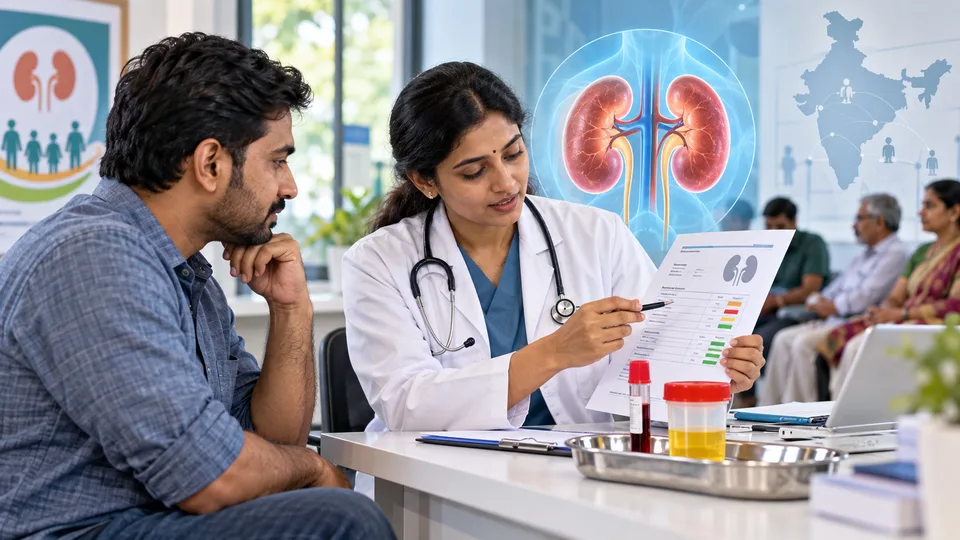
With kidney disease quietly spreading across the country, a Parliamentary Standing Committee on Health and Family Welfare has proposed that every adult aged 20 and above get their kidney function checked twice a year.
The recommendation falls under the National Programme for Prevention and
Control of Non-Communicable Diseases (NP-NCD). The panel wants the test offered free to people below the poverty line and at a token charge to everyone else.
It also asked for closer, doctor-guided monitoring of people living with
diabetes or high blood pressure, the two conditions behind most chronic kidney
disease (CKD) cases in India.
The numbers explain the urgency. A Lancet-published global study puts CKD among India’s leading disease burdens, second only to heart disease, and estimates that about 13.8 crore Indians lived with it in 2023. Another 2025 report suggests it affects roughly 13 to 16 per cent of adults and villages fare worse than cities, at around 15 per cent against nearly 11 per cent. The committee also noted that around 200,000 people reach kidney failure every year, when dialysis or a transplant is the only route left.
The heart of the problem is that the kidneys rarely complain early. Many people feel perfectly fine while these organs slowly lose ground, and by the time swelling, fatigue or changes in urination appear, the damage can be considerable. Nephrologists say this is why the panel favours catching trouble early rather than treating it late.
The screening itself is simple. A kidney function test uses blood and urine. samples to check serum creatinine, a waste product the kidneys should clear; the estimated glomerular filtration rate (eGFR), which reflects how well the Kidneys filter blood; blood urea and protein or albumin in urine are early warnings. sign; and electrolytes such as sodium and potassium. Panels can differ slightly between laboratories, and most people need no special preparation, though a doctor may occasionally ask for fasting.
Experts also point to everyday habits that quietly strain the kidneys: heavy salt intake, processed foods, too little water, smoking and alcohol.
Behind the statistics are families who often learn of the illness only when it is advanced and face the expense and exhaustion of dialysis. A cheap test, done regularly, could change that story.
The committee’s suggestion is not yet a mandate, and questions on funding, lab access in rural areas and follow-up care remain. But its message is clear: check early, check often, and do not wait for symptoms.