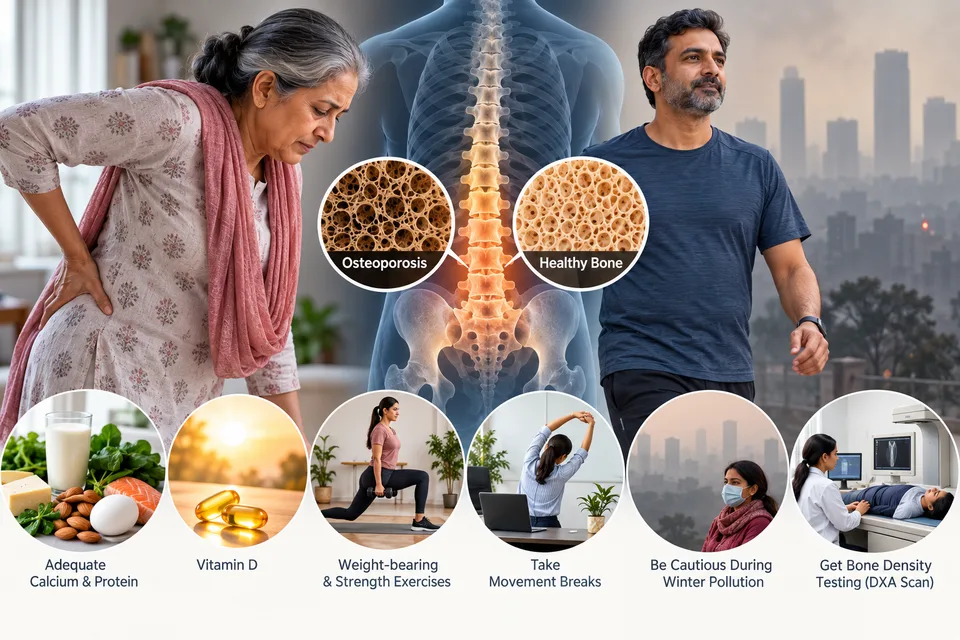
Osteoporosis is often seen as a women’s condition, but new Indian research suggests men are affected too. A systematic review and meta-analysis published in the Indian Journal of Medical Research in September 2026 estimated that 14.6% of healthy adult Indian men had osteoporosis, while 50.3% had osteopenia, a milder form of bone loss. The findings are not nationally representative, but they point to a wider problem than many assume.
The condition tends to develop silently. Bone loss is influenced by ageing, hormonal changes, nutritional deficiencies, physical inactivity and certain medications. Researchers are also studying a possible link between PM2.5 exposure and lower bone mineral density, although pollution is not an established as a direct cause of osteoporosis.
Dr Sushil Sharma, Sr. Consultant (Joint & Knee Replacement Surgeon) at Kailash Hospital, Noida, says: “Osteoporosis often goes unnoticed until a fracture occurs. Older adults, postmenopausal women and those with risk factors, including early menopause or a previous fracture, should consult their doctor about testing for bone mineral density. Working professionals should break up prolonged sitting with regular movement and weight-bearing exercises. Adequate calcium and protein, along with addressing vitamin D deficiency and regular exercise, can help maintain bone strength. Anyone experiencing a fracture after a minor fall or unexplained loss of height should seek medical evaluation.”
Doctors say the lack of symptoms is the heart of the problem. Dr Neelabh, orthopaedic surgeon at Jeewan Nursing Home & Hospital, Pusa Road says, “Because osteoporosis gives no warning. There is no pain, no swelling, nothing a woman can feel as her bones thin, so she has no reason to see a doctor. Many also put their family’s health first and ignore small signs. like a stooped back or shrinking height, assuming it’s just age. Bone density testing isn’t part of most routine check-ups either. So the first real alert often comes with a fracture after a minor fall, and by then the bone loss has been building for years. We need to start the conversation much earlier.”
Professor (Dr) Rajesh Bhalla, orthopaedic surgeon at JMC Hospital, says some early signals are routinely missed. “A big issue is not paying attention to changes like early menopause or irregular periods, which can speed up bone loss. Prevention does not need to be complicated. It just needs to start before the first symptom, because osteoporosis gives none.”
Who should get screened, and when?
Dr Neelabh says the answer depends on risk. “For most women, the conversation should begin around menopause, and certainly by 50 depending on risk. If she has risk factors, such as early menopause, a family history of fractures, low vitamin D, long-term steroid use, thyroid problems or a low body weight, she should be screened sooner. A DXA scan is quick and painless. However, it is rarely done because of low awareness, patients feeling fine, and doctors sometimes not suggesting it.
Dr Aakar Kapoor, Founder & Partner & Consultant Radiologist, City Imaging & Clinical Labs, Delhi, says: “Women experiencing early menopause, particularly before the age of 45, may face accelerated bone loss due to declining oestrogen levels. The risk of osteoporosis also increases with age, while prolonged sitting and reduced physical activity among working professionals can make it harder to maintain bone strength.”
Dr Kapoor adds: “Women aged 50 and above, those with early menopause, and individuals with other risk factors should consult their doctor about bone health assessment. A DXA scan is the standard test for measuring bone mineral density. Osteoporosis often has no early symptoms, but persistent back pain, unexplained loss of height, a stooped posture or fractures after minor falls warrant medical evaluation.”
Small loads, big returns
Prevention, doctors stress, does not require hours in the gym. Dr Rajesh Bhalla says the key is a regular, simple load on the bones. “In most instances, women hardly have any time, because the day is already full of work and family. The good news is that bones respond to regular, simple loads, not long gym sessions. Brisk walking, climbing stairs, dancing, light strength training, resistance training, and light weight-bearing exercises all stress the bone in a positive way.”
He adds, “For osteoporosis, that matters twice over: it helps slow bone loss, and stronger muscles and better balance cut the risk of falls, which may cause fractures. However, fracture risk in osteoporosis is not limited to falls. Exercise precautions are particularly important for women with vertebral fractures. Poor posturing and lifestyle may be some other risk factors.”
He also cautions, “Women who already have osteoporosis or have had a fracture should check with their doctor before choosing exercises, as some movements, like heavy twisting or forward bending, may not be safe.”