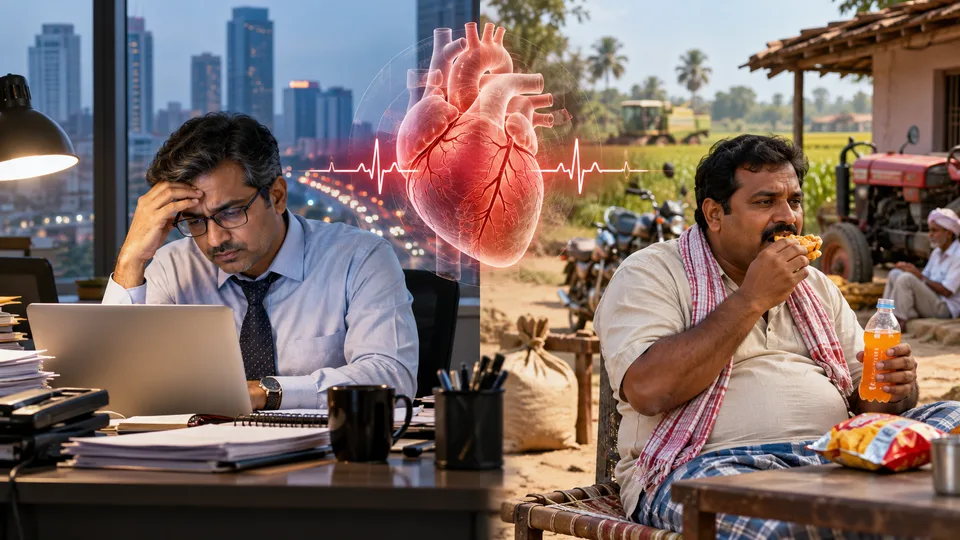
A study of 65,364 Indians aged 45 and above has found that people who stayed well-off from childhood into adulthood were more likely to report certain heart conditions than those who remained poor.
Published in the American Journal of Preventive Medicine, the research was carried out by teams from AIIMS, New Delhi, and Harvard. It drew on data from the Longitudinal Ageing Study in India, collected in 2017-18, and tracked participants’ economic standing in both early life and adulthood.
Compared with the consistently disadvantaged, the consistently affluent had 1.8 times the odds of heart failure and 1.7 times the odds of a heart attack. Their odds of an irregular heartbeat were 1.43 times higher, and overall cardiovascular disease odds were 23 per cent higher.
However, Dr Vikas Chopra, Director of Cardiology and Cath Lab and a senior interventional cardiologist at Primus Super Speciality Hospital, said the pattern is not confined to the affluent. “Normally, the patients are those with a comfortable income, a desk job, little movement, irregular sleep and a lot of stress. But the gap is closing.”
Dr Chopra noted that “rural India is changing fast. Farming is more mechanised, people walk less, packaged snacks, sugary drinks and refined oil have reached the village shop, and tobacco use remains high. Add undetected hypertension and diabetes, and heart disease follows.”
Dr Santosh Gupta, Associate Director – CTVS at Paras Health, Udaipur, said the study underlines how several factors shape heart health. “The study highlights the importance of understanding how lifestyle, socioeconomic background and access to healthcare can influence heart health. In clinical practice, factors such as prolonged sitting, limited physical activity, irregular sleep patterns, chronic stress and unhealthy dietary habits are important considerations when assessing cardiovascular risk.”
“With changing work routines and increasingly sedentary lifestyles, maintaining a balance between professional responsibilities and personal well-being has become essential.” He added that heart disease cannot be attributed to income or lifestyle alone, as age, family history, existing medical conditions and other factors also play a role.
Dr Gupta also pointed to the age of the data. “Since the study uses data collected in 2017–18, further research would help establish how these patterns have evolved over time.”
“Rather than drawing conclusions based solely on financial background, it is important to focus on individual risk factors and encourage people from all socioeconomic groups to adopt healthier habits and undergo timely health assessments. Early prevention and awareness remain key to protecting long-term heart health,” added Dr Gupta.
Dr Chopra said younger patients are now a concern. “The real concern is the younger patients now, in their thirties and early forties, from both cities and villages. The difference is that rural patients often reach us late because screening is limited and symptoms get ignored. Awareness is improving, but a more comfortable life without matching habits is raising risks everywhere.”
Dr Gupta said heart health needs steady attention whatever a person’s finances. “Heart health requires consistent attention, regardless of a person’s income or financial background. Regular health assessments can help identify risk factors before they lead to complications.”
“Adults should periodically monitor their blood pressure, blood sugar and cholesterol levels, with the frequency of testing determined by their age, medical history and individual risk profile. People with a family history of heart disease or existing health conditions should consult a doctor about appropriate screening and preventive care.”
Regarding daily lifestyle, Dr Chopra noted, “Walk briskly for at least 30 minutes, five days a week, and don’t sit for hours at a stretch. Eat more home-cooked food, with plenty of vegetables, fruit, dal and whole grains, and cut down on fried and processed food, sugar and salt.”
“Quit tobacco completely and keep alcohol minimal. Aim for seven hours of sleep and find a real way to manage stress, whether that is prayer, music or time with family.”
“None of this is expensive. It only needs consistency, and the earlier you begin, the more it protects you. For those in rural areas and small towns, the first step is simply getting blood pressure and sugar checked at the nearest health centre, as early detection costs very little.”
Dr Gupta added, “Most importantly, people should seek medical advice for persistent or unusual symptoms and avoid delaying care. Prevention is most effective when healthy habits and timely medical guidance become part of everyday life.”