Leading pulmonologists and critical care specialists have urged the government to declare air pollution a public health emergency and tackle it “on a war footing”. They also warned that fine particulate matter is driving chronic lung, heart and kidney disease, and lung cancer even among people who have never smoked.
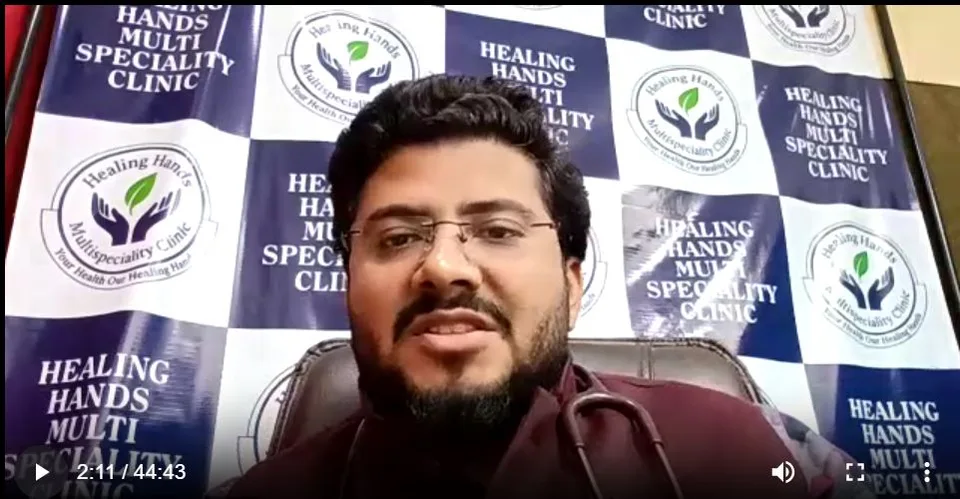
The warning came at the “Invisible Killer in Air” webinar, part of the monthly National Health Dialogue Series of the Federation of All India Medical Association (FAIMA), held on Saturday evening. The discussion was hosted by Dr Bibhu Anand of Sir Ganga Ram Hospital. The panel included Dr Pankul Mangla, Senior Consultant Pulmonologist at BLK-Max Super Speciality Hospital, New Delhi; Dr Dhruv Anand, Associate Consultant, Pulmonology, at Fortis Hospital, Noida; and Dr Sajal Bansal, Physician and Critical Care Consultant, Amravati, Maharashtra.
Beyond the lungs
Dr Pankul Mangla said prolonged exposure causes oxidative stress and lung damage that extends well beyond the respiratory system. PM2.5, he said, is the most dangerous pollutant because it penetrates deep into the alveoli, while gases such as sulphur dioxide from vehicles inflame the airways. These exposures are linked to COPD, asthma, interstitial lung disease and pneumonia. Doctors routinely see patients with upper respiratory infections and burning in the throat and eyes. Lung cancer is also rising among non-smokers, he said.
Dr Dhruv Anand said the impact on the heart and metabolic system comes in two phases: acute effects in the short term and chronic conditions such as hypertension and chronic kidney disease later. He said the heart and brain are affected whenever pollution levels rise.
Dr Sajal Bansal described PM2.5 as an “invisible killer” that lodges in the alveoli and raises the risk of COPD, asthma and lung cancer. Early damage such as airway swelling and inflammation may be reversible, he said, but prolonged exposure can make it permanent, progressing from bronchial asthma to lung cancer.
Children, elderly most at risk
Children are especially vulnerable because their lungs are still developing, Dr Mangla said, and toxic fumes can lead to poor lung function and a higher risk of asthma and COPD later. Pollution can also damage the placenta and affect maternal health, potentially leading to low birth weight or preterm birth. Lung function declines naturally with age, making older people more prone to COPD, asthma and pneumonia.
Masks, purifiers, and exercise
On masks, Dr Bansal said a properly fitted N95 is a must in Delhi and nearby areas, as it filters 90-95 per cent of particles, including PM2.5. Surgical masks, he said, offer little more than “mental satisfaction”, as they do not filter PM2.5 or hazardous gases. The N95 must seal well, with no gaps at the sides.
Dr Dhruv Anand said indoor air can be a major problem because of poor ventilation, and recommended purifiers with HEPA filters, which can remove PM10 and PM2.5, dust, pollen and smoke. He said the effectiveness of portable wearable purifiers needs more study, though people should try whatever measures they can.
On diet, Dr Mangla said nutrition cannot fully negate pollution’s effects, but vitamin C and E, carotenoids, leafy greens, nuts and omega- 3 fatty acids help counter oxidative stress, along with good hydration and adequate protein and calorie intake. He advised avoiding incense, dhoop, wood fires and bonfires, and exercising at home or in a controlled-air environment rather than outdoors.
Dr Dhruv Anand advised against outdoor exercise when the air quality index is high. Going out is generally acceptable up to about 100, he said, and unsafe at 400-500. For those with pre-existing conditions, even levels above 150 are risky, particularly in early mornings and late evenings. Such patients should go out only during sunny hours, keep inhalers handy and wear masks.
Dr Mangla said the situation should have been declared a public health emergency much earlier, given that air quality is already in the 400-500 range. “We can buy good water and food, but what about air?” he asked. He called for strict measures, including a complete ban on construction for the next few months, curbs on bonfires and garbage burning, and action on vehicular and dust pollution. Stubble burning has decreased owing to government action, he noted, but low wind speed traps smoke and causes smog.
Asked why the same crisis returns every year, Dr Dhruv Anand said a collective effort is needed: policies must be enforced, and citizens must also do their part by using cars less and avoiding firecrackers, which he called a civic duty. More restrictions on vehicles are needed, he said.
A year-round approach
Dr Bibhu Anand called for pollution-control policies to be implemented from the start of the year rather than only when the smog sets in.
Wrapping up the discussion on how polluted air affects the heart, brain, blood vessels and quality of life, he said clean air is not a luxury but a necessity, and that every step can make a difference to someone’s life. He urged people to take responsibility for the air they leave behind for their children, “and not just today”.