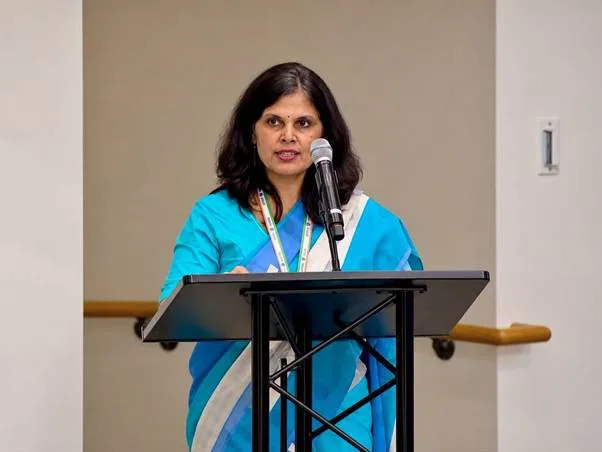
Union Health Secretary Punya Salila Srivastava has reaffirmed India’s commitment to strengthening global health security at the UN High-Level Meeting on Pandemic Prevention, Preparedness and Response, held at the United Nations Headquarters in New York on September 25.
Representing India at the meeting, Srivastava stressed that lessons from the COVID-19 pandemic must translate into sustained investment, stronger institutions and resilient health systems. She outlined India’s whole-of-government approach to pandemic response, highlighting efforts to expand laboratory networks, emergency coordination, health workforce capacity, medical stockpiles and clinical care, while noting that international assistance should complement, not replace, domestic responsibility and financing.
Srivastava also called for digital public infrastructure to be recognised as a global public good, pointing to its role during COVID-19 in surveillance, vaccination drives, risk communication and keeping supply chains and health services running.
Highlighting India’s contribution during the pandemic, she noted that the country supplied 300 million vaccine doses to around 100 nations and two UN entities, besides extending medical assistance to over 150 countries — a reflection, she said, of India’s belief in “One Earth, One Health” and its solidarity with the Global South.
On the WHO Pandemic Agreement adopted in May 2025, Srivastava called it a significant milestone but said its success hinges on a fair Pathogen Access and Benefit Sharing system, under which countries sharing pathogens receive timely access to vaccines, diagnostics and therapeutics in return. She added that ongoing negotiations on the PABS annex should not be prejudged, and that the ‘One Health’ approach must be implemented in line with national laws and circumstances.
“Global solidarity must be demonstrated through action,” Srivastava said, adding that preparedness remains a shared responsibility with equity at its core.
WHO Director-General Tedros Adhanom Ghebreyesus urged faster progress on the PABS negotiations, warning that delays could hamper the world’s readiness for future pandemics. UN Deputy Secretary-General Amina Mohammed cautioned against complacency and called for stronger community-based surveillance systems.