More than 40 crore Indians — over a quarter of the country’s population — are stuck in a healthcare no-man’s-land: ineligible for government health schemes, yet unable to afford the spiralling cost of private treatment. This is the stark picture painted by the Parliamentary Standing Committee on Health and Family Welfare in its 176th report, “Affordability and Accessibility of Healthcare Facilities in Public and Private Sector”, tabled in the Parliament on August 7.
The panel, headed by Rajya Sabha MP Prof. Ram Gopal Yadav, has packed the report with 368 recommendations — an unusually large number that reflects just how many pressure points it found in India’s health system. Chief among its concerns: private hospitals now handle over 60% of inpatient care and roughly 70% of outpatient visits, especially in cities, yet come at a steep premium. The committee’s own numbers are telling — an average hospital stay costs around Rs 6,631 in a government facility, compared to Rs 50,508 in a private one, a gap of nearly eight times.
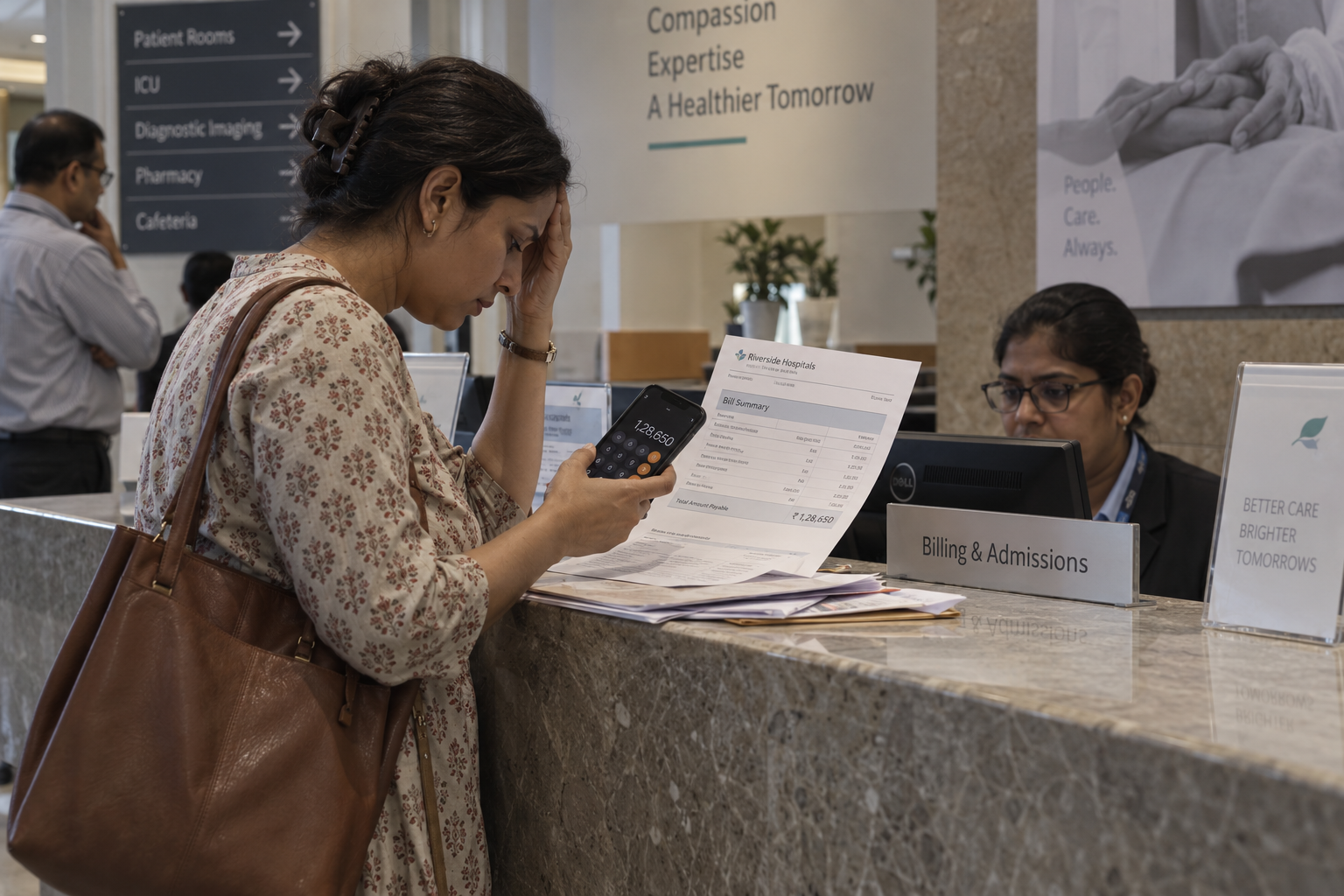
The report does not mince words on billing practices, either. It points to excessive charges, unnecessary tests, and inflated costs for routine procedures as factors pushing already-vulnerable families toward debt or forcing them to sell assets just to pay medical bills. To fix the situation, the committee wants mandatory price transparency before a patient is even admitted, along with quicker grievance redressal for disputes over bills and insurance claims.
One of the more contentious proposals ties hospital room charges to a familiar yardstick: three-star hotel tariffs in the same area, with add-ons for resident doctors, nursing, food, and laundry folded into the base rate. Predictably, this has not gone down well with hospital groups.
Beyond pricing, the committee has also pushed for Jan Aushadhi Kendras inside every district hospital, CHC, and large empanelled private hospital, a new voluntary contributory insurance model built jointly by the government and private players, a full review of GST on healthcare, and a new AIIMS or satellite facility on Delhi’s northern outskirts to ease the load on the capital’s tertiary care system.
The takeaway both sides agree on: India’s healthcare pricing needs more transparency. Where they differ is on how to get there — regulation that treats hospitals like any other price-capped service, versus one that accounts for the genuine cost of running one.